
NORTHERN STORYTELLERS ABOUT KOSULYAS
We present to you extracts about the northern pryanik — kosulya — from collections and diary entries of writers Stepan Pisakhov and Boris Shergin.
About KOSULYAS / «Fairy tales. Essays. Letters» by Stepan Pisakhov
«The old way of life leaves with the mystery of the origin of Christmas kosulyas. It has long been a tradition to bake kosulyas for Christmas. But why are they baked for Christmas only? And where did this name, kosulyas, come from? These are questions up to this day...
I will try to say a few words about the kosulyas. Maybe someone will respond, and it will be possible to find out the origin of kosulyas.
The most ancient kosulyas are from Kholmogory and Mezen and they are made of black dough, sometimes mixed with white dough. Kholmogory kosulyas resemble a deer in its appearance. A figure is sculpted from the dough. It has four legs, a head, a bush of branched horns, apples on the horns. There are birds on the apples, or rather the wings of birds made of white dough (an apple with wings resembles the image of a winged sun). The whole kosulya seems to have been transferred from a very old pagan world. There seems to be some kind of occult meaning in this strangely beautiful figure.
Kosulyas are small — about an inch tall, the drawing is pretty simple. Sometimes people try to give them a resemblance to a cow or a horse (sometimes with a rider) ...»
In the Mezen uezd flat kosulyas are baked alongside the small ones (like in Kargopol). They roll the dough to a long ribbon with a thickness of half a pencil and roll it to make different drawings, sometimes unexpectedly similar to the sacred Lotus with wavy surroundings, reminiscent of the shining. There are also birds on the nest and other figures.
In the spring of 1914, the old woman undertook to bake kosulyas at my request. She rolled out the threads from the dough and began to make the drawing while whispering something. I asked, «What are you whispering, babushka?» The old woman stopped and said sternly, «Don’t distract me if you need kosulyas». I don’t know if the old woman’s whispering had anything to do with the kosulyas. She did not explain. Others talked it out with ignorance.
In Arkhangelsk kosulyas are baked from gingerbread dough, cut with iron molds and abundantly decorated with white and colored (more often pink) icing sugar, plastered with «gold» and «sprinkles». Iron forms, sometimes quite thick, are kept for a long time and passed from one generation to another.
Kosulyas bakers often do not know how to draw with a pencil at all, so they take a stick or a tube with glaze and create amazing, beautiful drawings on kosulyas, repeating what they have seen and learned from their elders.
The baking of kosulyas begins in October. In early December, kosulyas appear in bakeries and pastry shops. In the middle of December, they fill up all the showcases and shelves of bakeries and pastry shops.
Before Christmas, kosulyas fill up the market. Kosulyas sellers line up in rows and open their boxes, offering a wide choice to customers. A huge number of parcels with kosulyas were sent across Russia and even abroad.
A lot of things in the Arkhangelsk Governorate have been preserved from very ancient times. It is possible that people of Novgorod and Moscow who came here brought pryaniks with them. And maybe our kosulya came into being from the ancient kosulya made of black dough and pryanik. But maybe the gingerbread was brought to the north by foreigners and became Christian cookies instead of pagan cookies.
The most ancient forms of paintings are a star, an angel, a shepherd, a basket (with gifts), birds, animals close to humans, a Christmas tree, grapes, vases with flowers, a deer with a sleigh, a lion (a lion as the king of animals or maybe English or Norwegian influence here). Later kosulyas are an Amazon, a cabman, a dog with a doghouse, a cat. And those that have appeared over the past decades — a steamboat, a steam locomotive, a cyclist, an airplane. And after 1920 — hammer and sickle and an old man with the slogan «Workers of the world, unite!»
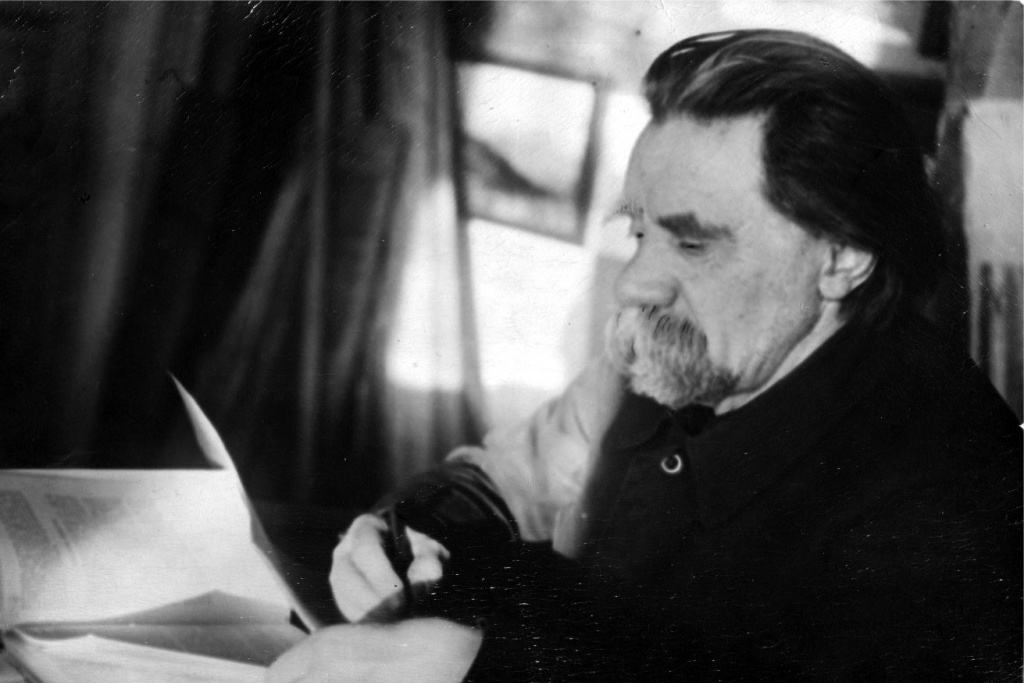
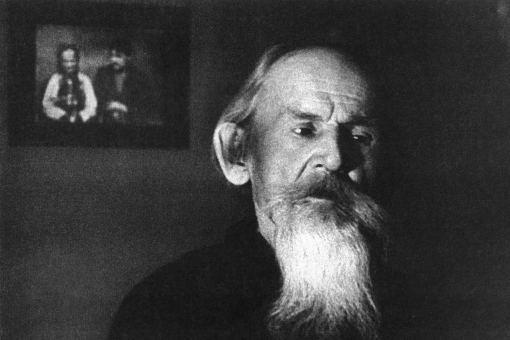
KOSULYAS / «From the diaries» by Boris Shergin
Kosulyas were an important part of Christmas. Bakers (and there were also kosulyas masters who only baked kosulyas and only during this time of the year) were starting to bake kosulyas two months before Christmas. It was baked of white flour with added treacle. They baked a bunch and kept it in storerooms. In December they began to paint kosulyas with elegant sugars. Bakeries, pastry shops and small shops were filled with kosulyas. During the pre-holidays days there were rows with kosulyas and a kosulyas trading on the market. That’s the beauty.
The gingerbread deer is almost a yard long. There are spots of gold leaf on the golden-brown dough. Golden horns and a white sugar headwear «rocaille» — this beauty would be admired by Watteau and Boucher. In the pastry shops the kosulyas were fancy shaped so that the young lady could put it on a toilet table...
And how I loved it when in a small shop with a crooked door where an old woman was selling herring, where in winter a kerosene lamp was the only source of light. How I loved it when Christmas kosulya appeared behind the frame of a showcase like the first swallow. We didn’t eat kosulyas from market at home, we were spoiled by the abundance and art of mothers, aunts and grandmothers. In the kosulyas for sale we did not find enough pone, oils and soul at that time.
We loved the kosulyas as a decoration. Kosulyas were given to children in addition to other various gifts. Even the grooms gave the brides kosulyas which were expensive and skillfully made. And during the holiday guys met at intersections and bragged to each other about their kosulyas. One «deer» has already lost his horns, and the «girl» ’s legs were eaten. We ate homemade pryaniks at home while the kosulyas laid on the tablecloths, by icons or were hung on the Christmas tree. The smell was sweet. If you store one over the winter, sugar crumbled... As I say here just like in many old-fashioned houses of the old Town, treacle cakes (pryaniks) were baked. A week before the holidays the dough was prepared. First-class molasses and melted Russian butter were poured into the gritty flour. It was kneaded in large clay pots. About 70 lbs. of thick dough were made. It was stored in tied up pots in the cold. They baked as much as necessary or sometimes in reserve. The dough was rolled to half a finger thickness. Hearts, stars and circles in the size of a glass circle were cut out using tin molds, then it was put in the oven. Both the dough and the pryaniks were stored for a long time.
-
14 August 2020Kenozersky National Park in top-15 amazing places in Russia
-
14 August 2020Arkhangelsk region is the place to visit - recommended by Forbes Life
-
14 August 2020Winter wonderland in caves of Pinega
-
09 November 2017Festival of street theaters in Arkhangelsk entered the top 15 cultural events