
SONGS AND BYLINAS
At the end of the 19th century the Russian North had the reputation of being the hearth of epic folk poetry. The main centers of epic creativity were found only in the European North, mainly in the Russian North.
In order to examine these rare works various expeditions were conducted. But the continuous existence of bylinas was not common in the Russian North, Arkhangelsk North had only separate places of epic culture. Epics on the Northern Dvina were never found. But on the Pechora, in the basin of Pinega and Kuloy, as well as on the coast of the White Sea, epic poetry was still thriving.
Formers emphasized the idea of epics’ folk nature. The northern peasants were not only farmers, hunters and fishermen — in their spare time they «engaged in crafts which were meant to preserve epic songs». Weaving nets, making equipment for hunting and fishing, tailoring and shoemaking skills gave them the opportunity to tell and listen to bylinas (epic poems) for hours. In the European North of Russia bylinas singing was not collective.
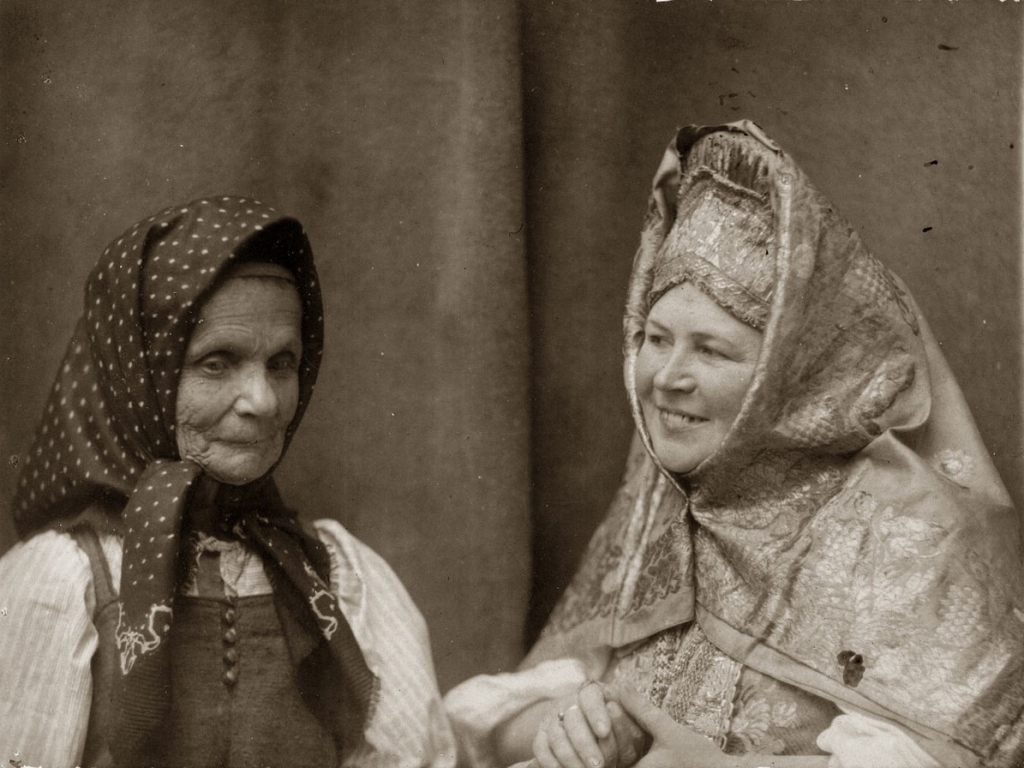
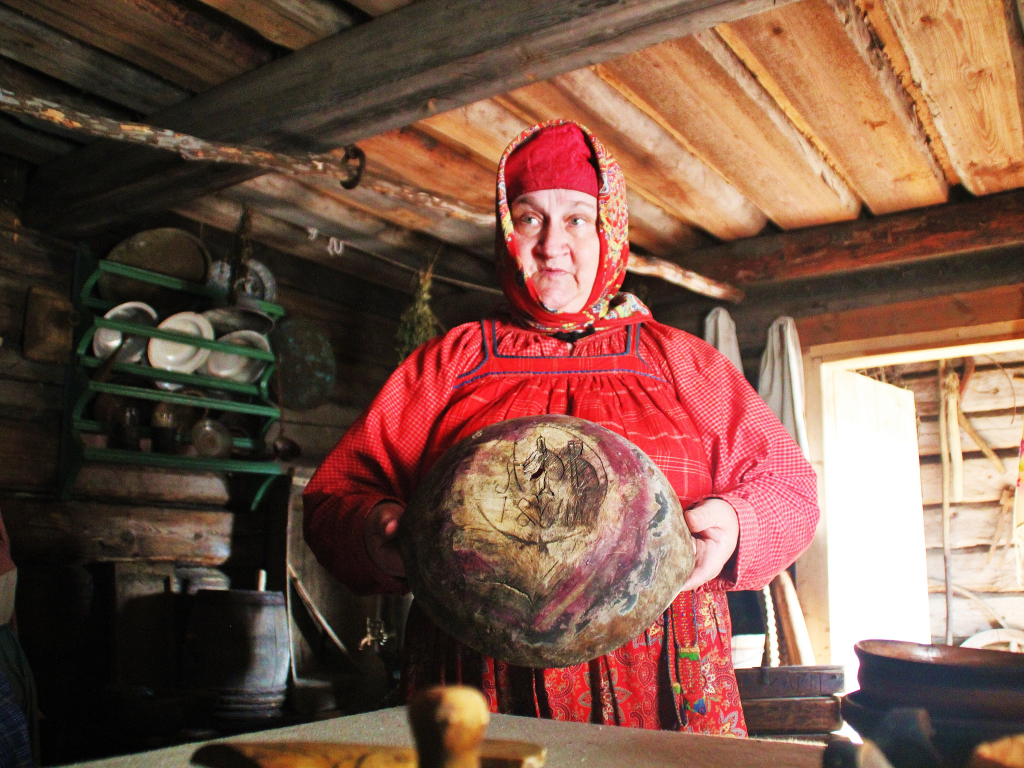
Epic songs were known and performed by a few experts, who were called «storytellers». It was said that bylinas are «told» or «sung». But they were not just sung, they were performed in the recitative style. Heroes-bogatyrs appear in these best epic texts, who carry the idea of justice, personal freedom and the reunification of Russian lands. Each storyteller considered himself obliged to sing the bylina as he heard it himself, traditionally. Recitative style of northern epics has «settled» in Russian symphonic music and influenced it. It would be enough to recall the direct quoting of the northern bylinas tunes in «Boris Godunov» by Mussorgsky or in «The Tsar’s Bride» by Rimsky-Korsakov.
The collector of Pinezhye bylinas Alexander Dmitrievich Grigoriev was the first to discover the bylinas performer Maria Krivopolenova. Olga Erastovna Ozarovskaya, having studied her entire repertoire, years later brought her to Moscow, away from the northern wilderness.
Ozarovskaya was an intermediary between «babushka» and the public during Marya Krivopolenova’s performances. She was telling the people that there is a «magical land in Russia», about the rare repertoire and the talent of a guest from the north. The starring role in the speeches was played by Marya Krivopolenova herself.
«Even Ozarovskaya’s success faded before the success of a little old woman in painted felt boots,» was written in one of the reviews about their performances. Ozarovskaya deliberately detracted people from her own artistic reputation as she was a true propagandist of authentic folklore on the stage. «In a huge hall, people of all ages and positions sing while getting up from their seats, with clean and reverent faces, without taking their eyes off the tiny babushka... And I stand by, and I am proud that fate handed me a wand for a magical transformation,» Ozarovskaya wrote in her article.
Olga Ozarovskaya had many students and followers. Having received her support, the famous northern writer Boris Shergin built his career for many years. At that time, he was a performer as well as a collector and interpreter of northern folklore.
A special credit belongs to the folklorists who studied this amateur creativity of modern storytellers. They recorded everything sung by Marfa Kryukova. According to these exact notes you can get a whole picture of how long the recitative style of bylinas was kept in people’s memory. Records of epic folklore, conducted from the mid-19th century to the mid-20th century, account about three thousand notes and reflect about 80 plots. More than two thousand of them have been published.
With the onset of the 20th century there were fewer storytellers, many bylinas were recorded in fragments. Songs of heroic content left epic poetry especially quickly. Boris Shergin shrewdly noted, «The Russian North was the last home of bylina. With the leaving of Krivopolenova, the decline of bylinas epic took place in the north. And this decline was magnificent.»
Photo credits to: A. Konychev, site Cultural heritage of the Arkhangelsk North, M. Radchenko
Information was prepared by the staff of the Arkhangelsk Regional Scientific Library named after N.A. Dobrolyubova, more information on the website http://cultnord.ru/
-
14 August 2020Kenozersky National Park in top-15 amazing places in Russia
-
14 August 2020Arkhangelsk region is the place to visit - recommended by Forbes Life
-
14 August 2020Winter wonderland in caves of Pinega
-
09 November 2017Festival of street theaters in Arkhangelsk entered the top 15 cultural events