
SYMBOLISM OF THE PAINTING
The main images and motifs of folk painting of the Russian North are found mainly in the paintings of residential buildings and household items.
While painting various objects, masters decorated them not only with ornaments. They also created plot compositions depicting scenes from everyday peasant life. Images of nature were constantly preserved in folk art because the masters lived in nature and relied on it. The image of the sun had the greatest significance. The circle (which symbolizes the sun) is often the core motif of the pattern.
A certain symbolism was associated with flora, which was also reflected in the paintings. For example, a white birch is sometimes an imagery of a bride, whom an oak (groom) is wooing. Viburnum often symbolized girlhood, same as cherry. Trees, berry branches, plants with fruits and berries to a certain extent were symbols of prosperity.
In Zaoneje, on the Pudozh coast, on the rivers Onega, Mezen, Vaga, Ustye, in Kargapolye and a number of other Districts, it was common to decorate houses, spinning wheels and other items with paintings of bouquets, garlands, flowerpots, blooming trees. The meaning of these drawings was associated with the wishing for happiness.
Herbs, flowers, bushes and trees were called the «hair» of the land. Water was painted as a serrated or wavy line. Moreover, the horizontal serrated or wavy line meant rivers and lakes, and the vertical one symbolized rain. The image of a «tree» surrounded by birds and animals is common in the paintings. Crowns, trunks, and sometimes roots marked with rhombuses and crosses are emphasized in the images of trees.

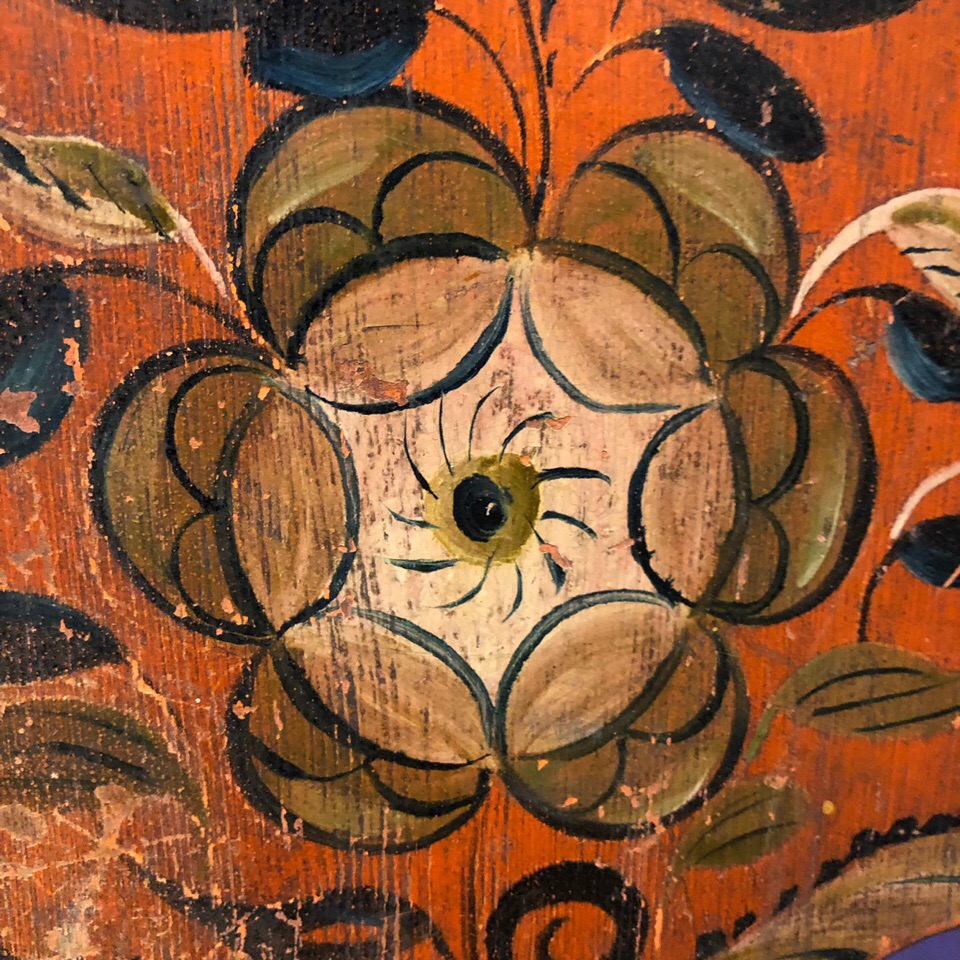
A tree with birds (the «tree of life») has become one of the favorite scenes of Russian folk art. It was associated with the idea of forces of nature and its power, and the well-being of mankind and its happiness which depended on nature.
Images of birds were widely represented in ornaments of the paintings. Birds often symbolized warmth, light, they portended harvest and wealth. The souls of the dead were personified in the images of birds. The bird’s imagery on a spinning wheel symbolized the bride, a rider or a horse meant the groom (the spinning wheel was given to the bride for the wedding).
Birds of paradise took one of the most important and honorable places in peasant art. Sirin and Alkonost birds were the most common and favorite images which were placed in the center of the painting.
The Sirin bird was very often represented in folk art and outlived other legendary characters. This is a mythical bird of paradise with the face and body of a woman down to the waist. It is a bird of happiness, joy and good luck. The imagery of Sirin was associated with the idea of well-being and happiness. Alkonost is a bird of sadness. According to the myths, the singing of these birds amazed people. Their portrayals, for example, in embroidery, are almost the same. Since these birds symbolized the joy of life, they turned into a magical firebird in folk art.
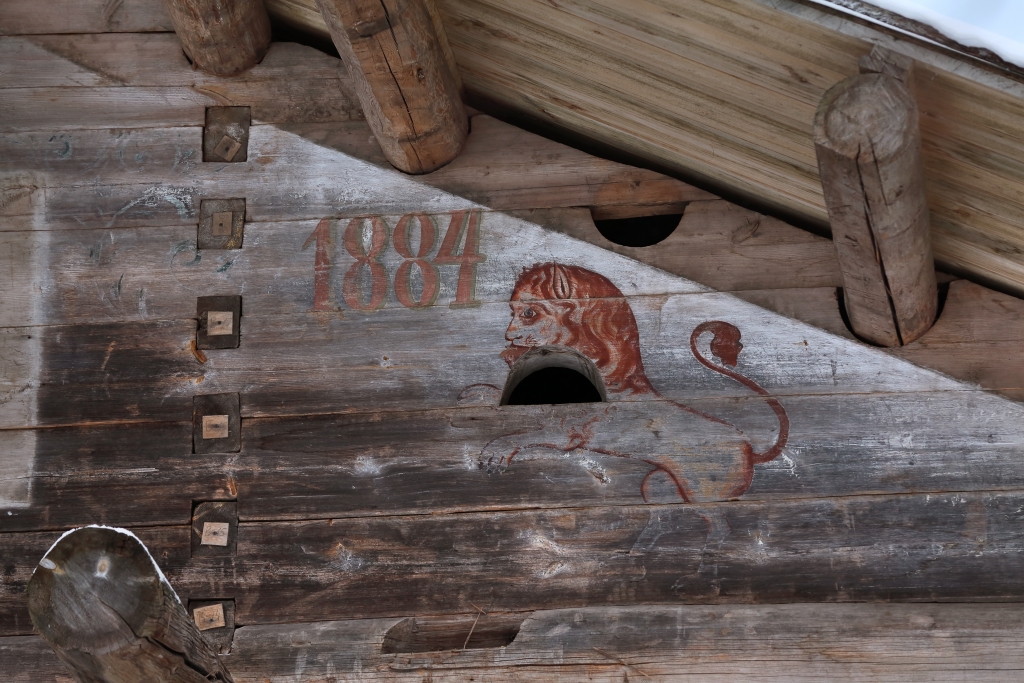
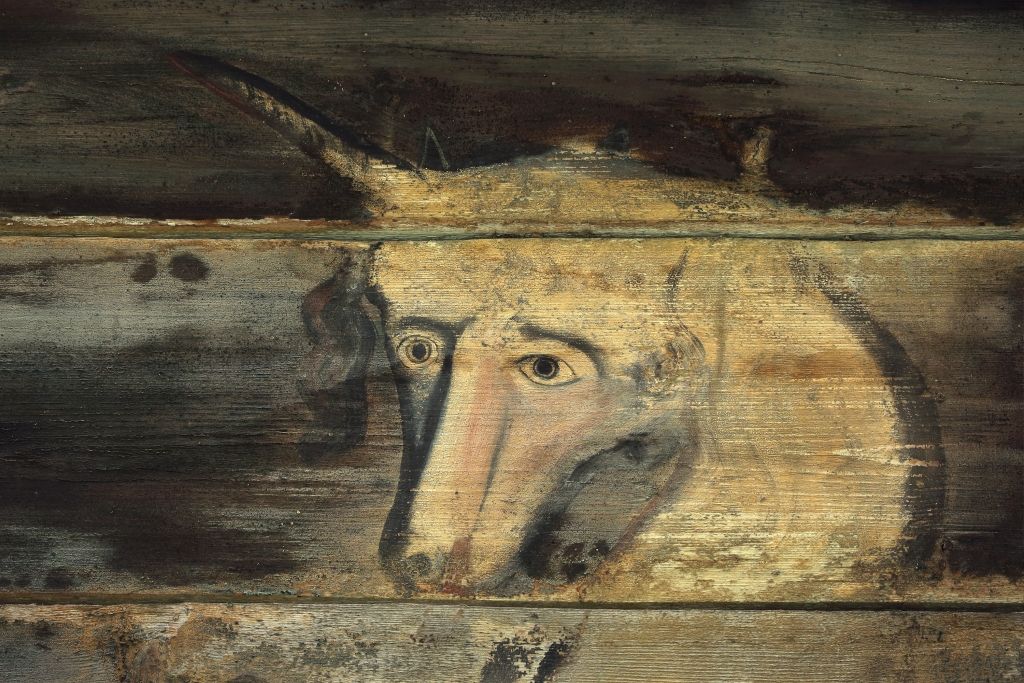
The imagery of a lion (leopard) was widely used in folk paintings, in embroidery and in the northern applied arts. The lion and the leopard differ in the presence or absence of a mane. The imagery of the lion as a symbol of power and might came to Russia from the East. Often in Russian folk paintings a lion looks more like a dog than a predatory beast. They were depicted standing or lying in a heraldry composition on the sides of a «tree» or vase of flowers with a menacingly raised paw.
An unicorn (a horse with a horn on its forehead) is also found in northern paintings. Usually, it is depicted standing on his hind legs. The earliest information about it and its images come from to the 15th century. The unicorn (aka Indrik or Inrog) is a mythical animal whose imagery may have come to life under the influence of Eastern cultures. The rhinoceros and the horse combined in the imagery of one beast — the unicorn. A legend has it that the unicorn was endowed with a special power and was capable of striking evil people and heretics. According to other myths, the unicorn is a powerful unknown deity that becomes the king of the underworld. Most often, a unicorn and a lion are painted on the facade on the sides of a flowerpot or a tree. Sometimes it is depicted in a fight pose, symbolically meaning the struggle of light and dark forces, day and night. Most often these figures are found in paintings of the Povazhye region.
The animals’ fight pose is apparently inspired by the image of the Moscow Print Yard’s trademark and was placed on the bindings of books. The symbol of the unicorn also has a significant Christian meaning as an imagery of the Son of God — Christ, while the lion and bull (taurus) were symbols of the evangelicals.
Looking at painting on the spinning wheels one can find scenes of peasant labor including spinning, weaving, feeding birds, field work, pasture, cattle slaughter, work in the forest and in the forge and scenes of recreation such as wine and tea drinking. On the back side of the spinning wheel most often one could see a multicolored figure of a man wearing a Peter’s caftan and riding a red horse painted in a semicircle. Sometimes there is a white blank space above it, where a woman could fit a mirror. Instead of a rider, other masters painted a horse or two horses or even a rider being chased by a lion. On one of the spinning wheels there is a simple painting of a fight between two warriors wearing antique armor.
Photo credits to: TIC, A. Samokhvalov
Information was prepared by the staff of the Arkhangelsk Regional Scientific Library named after N.A. Dobrolyubova, more information on the website http://cultnord.ru/
-
14 August 2020Kenozersky National Park in top-15 amazing places in Russia
-
14 August 2020Arkhangelsk region is the place to visit - recommended by Forbes Life
-
14 August 2020Winter wonderland in caves of Pinega
-
09 November 2017Festival of street theaters in Arkhangelsk entered the top 15 cultural events